******PRESS RELEASE******
For Immediate Release
AuSPEC AWARDS Winners Put Autistic Characters in Your Favorite Kids Cartoons
BURBANK, CA – May 1, 2026
Some outstanding animation writers got their flowers last night when the winners of the AuSPEC AWARDS kids animated series spec script competition were announced. “What an amazing event!” gushed Tom Kenny, the voice of SpongeBob SquarePants and presenter of the award for Best Musical Script. “What an amazing collection of talented and beautiful people.” It was “formal or fun” at the ceremony held by The Autism Scene, a nonprofit that advocates for the inclusion of more explicitly autistic characters in kids pop culture and runs the AuSPEC AWARDS competition.
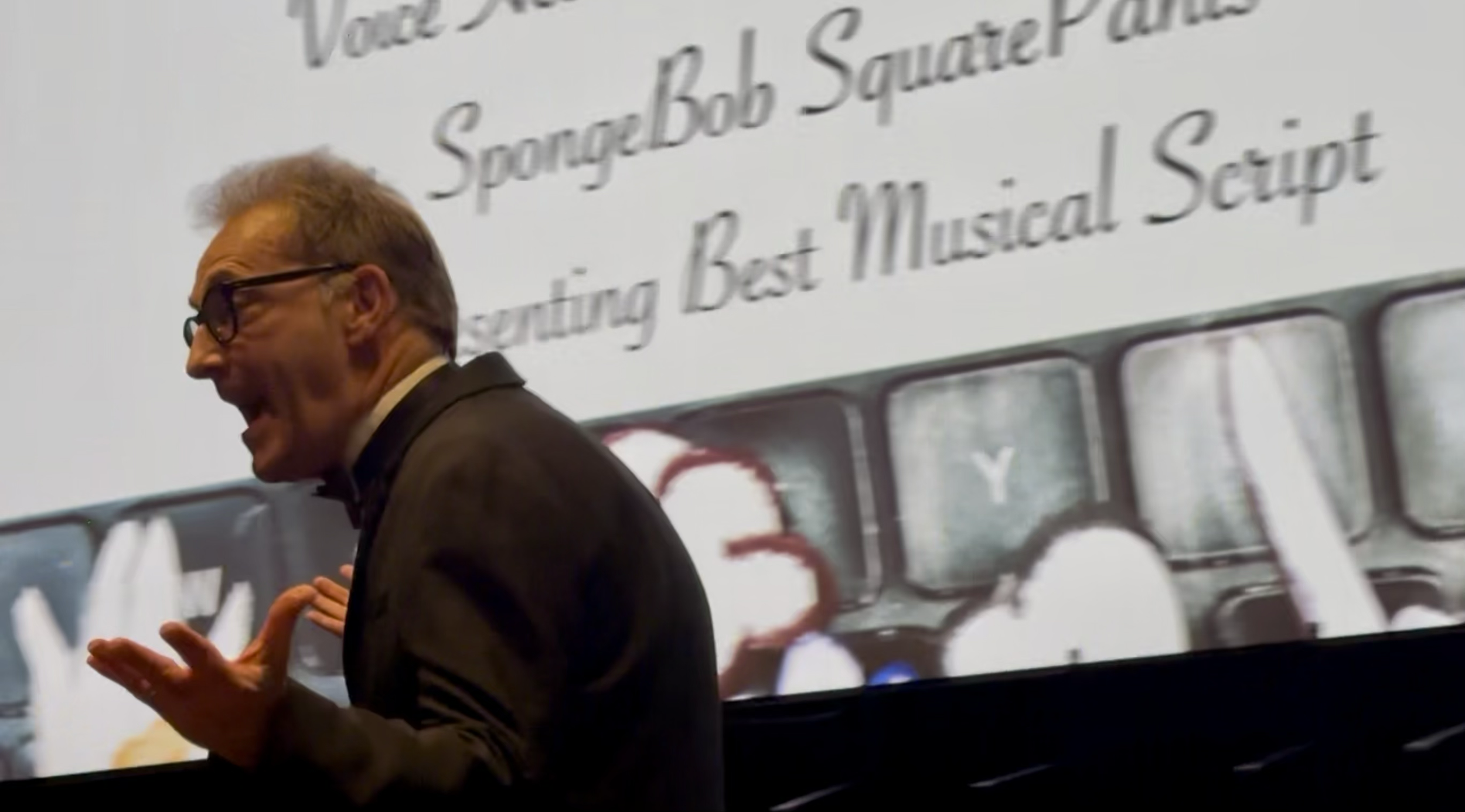
Tom Kenny presenting Best Musical Script
The competition invited writers to pick a current kids animated series, write an 11-minute episode of the show, and include a series regular “meaningfully interacting with an explicitly autistic character.” Awards were given for 17 categories like Funniest Script, Best New Character, Best Adventure Script and Best Explanation of Autism. Winners put explicitly autistic characters in popular kids shows like Phineas and Ferb, My Adventures with Superman and We Baby Bears, showing that autistic characters can be meaningful parts of all kinds of great stories. “We were really pleased with the quality of the scripts we received,” said Jeremiah Smith, head judge for the 2026 AuSPEC AWARDS. “It really proved our idea that kids animation episodes can feel organic and exciting and also include explicitly autistic characters.”
The $5,000 grand prize was won by the husband and wife writing team of Melinda Layden and Chris Page for their take on Big City Greens, introducing the autistic character Saoirse. “So much to love in this script!” said Smith. “Saoirse is a delightful, well-rounded character who feels like she always belonged in the show. The plot is funny and fits in so well with produced episodes of the show. Overall, just top-notch storytelling.”
Niya Wright emceed the evening with positive energy and deep empathy, drawing on her experience in creating the nonspeaking autistic character of Nassan for the Netflix animated show Ada Twist, Scientist. Her producer on that show, Kerri Grant, presented the award for Best Friendship Script to Ari Donnelly for his Kiff episode about making friends while waiting in line at a comic con. Other presenters included animation luminaries like Rick and Morty executive producer Monica Mitchell, autistic writer and voice actor Analesa Fisher, animation writers Patrick Rieger and Alyssa Feller, Autism in Entertainment founder Judi Uttal, and DC Animated Universe writer and producer Jim Krieg.
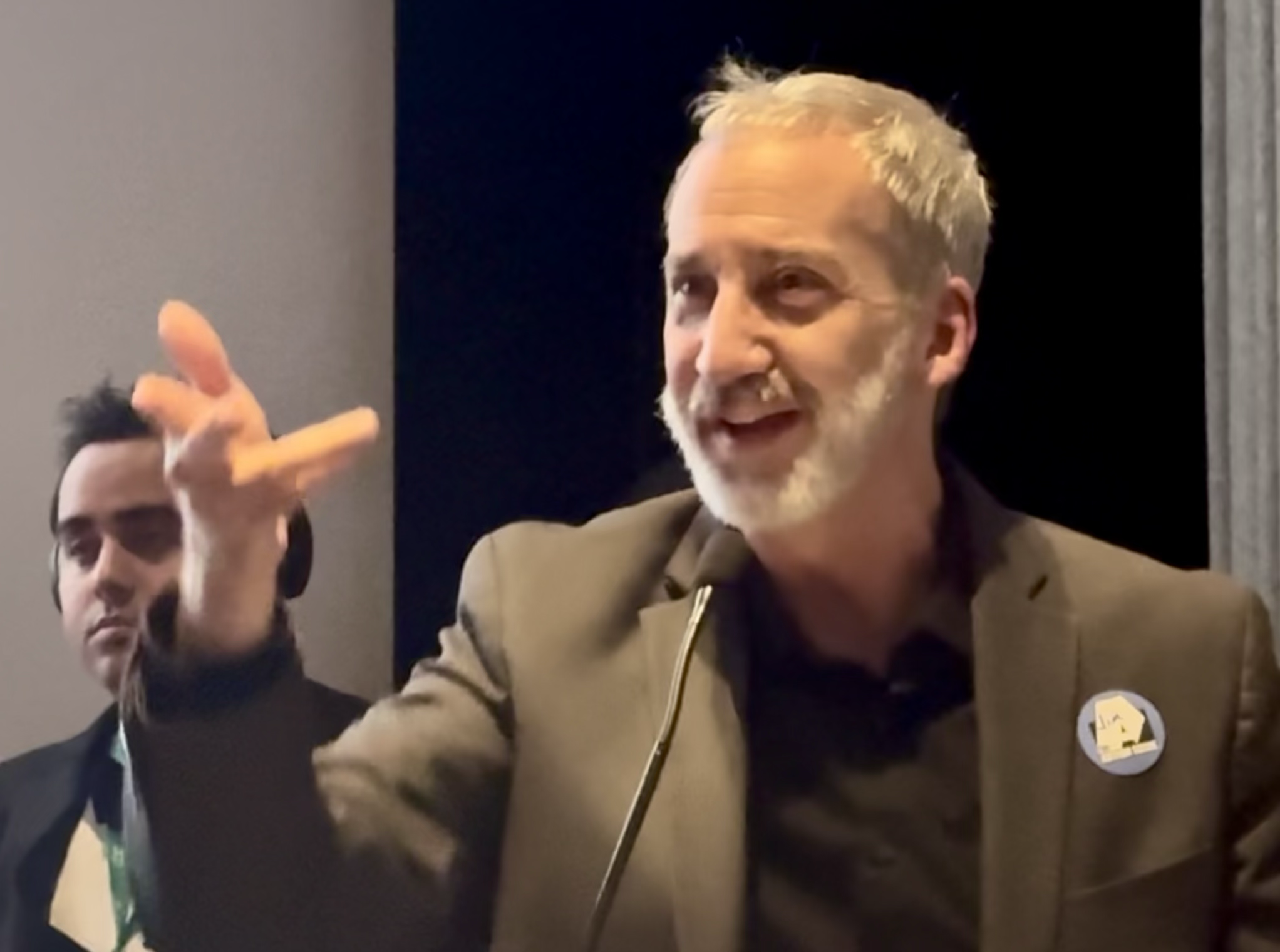
Jim Krieg presenting Best Superhero Script
Kirk Kushin was the head writer for the ceremony, and led the judges panel discussing the lessons learned from the whole project. One of the AuSPEC AWARDS judges was Alfonso Julián Camacho, a nonspeaking autistic advocate and author of “Autistic & Awesome: A Journal from the Inside, who used his augmentative and alternative communication (“AAC”) device to offer comments to the audience of animation writers and executives. “Our entertainment and advertising industries are evolving, recognizing the value and beauty of a truly diverse society,” said Camacho. “Tonight, we are all contributors to that positive evolution.” Camacho’s own company, Builders of Eloquence and Engagement, offered $500 in prize money to the winners of the Best Nonspeaking Character and Best Use of an AAC Device awards.
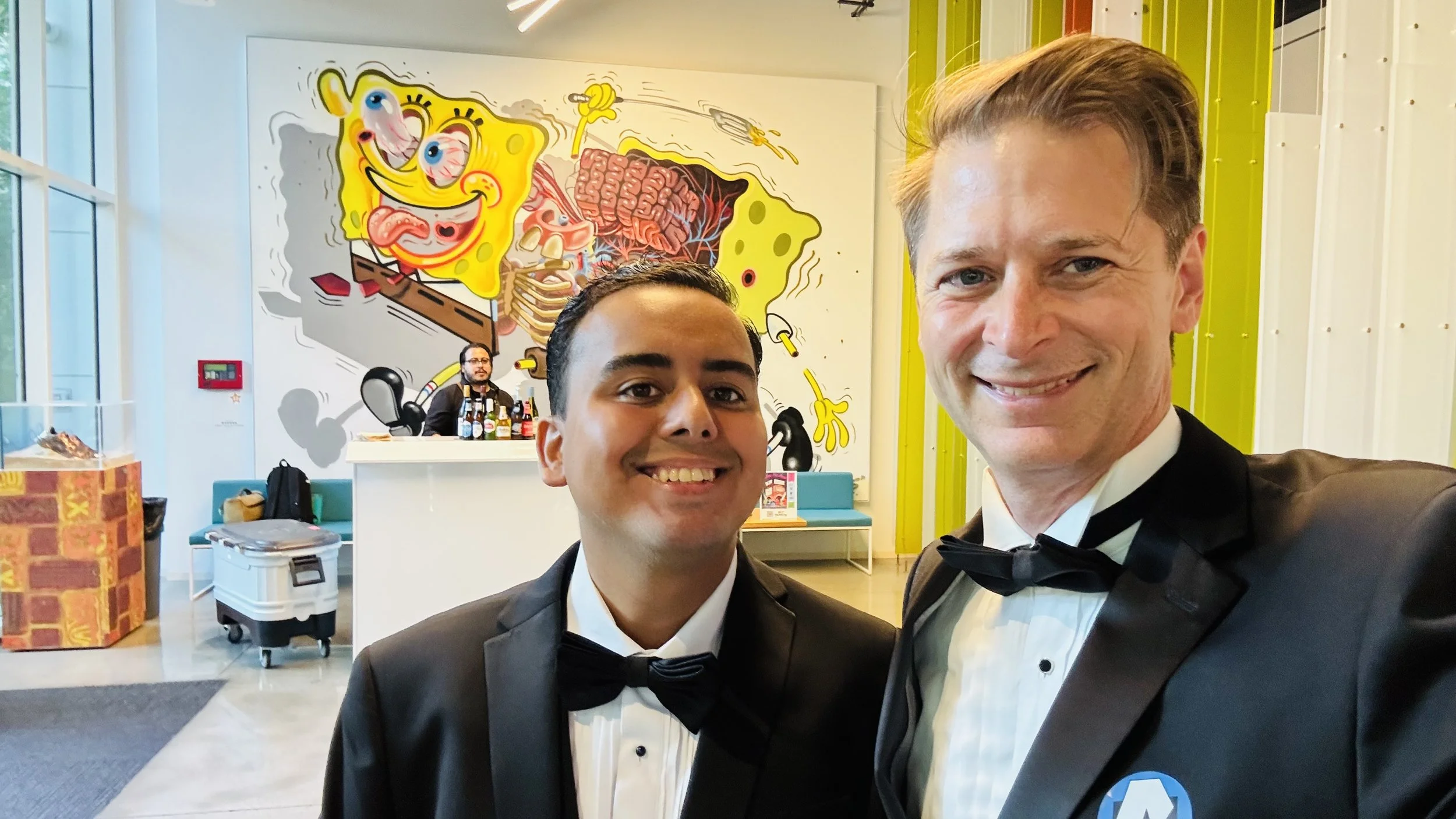
AuSPEC AWARDS judge Alfonso Julián Camacho and The Autism Scene executive director Britton Payne
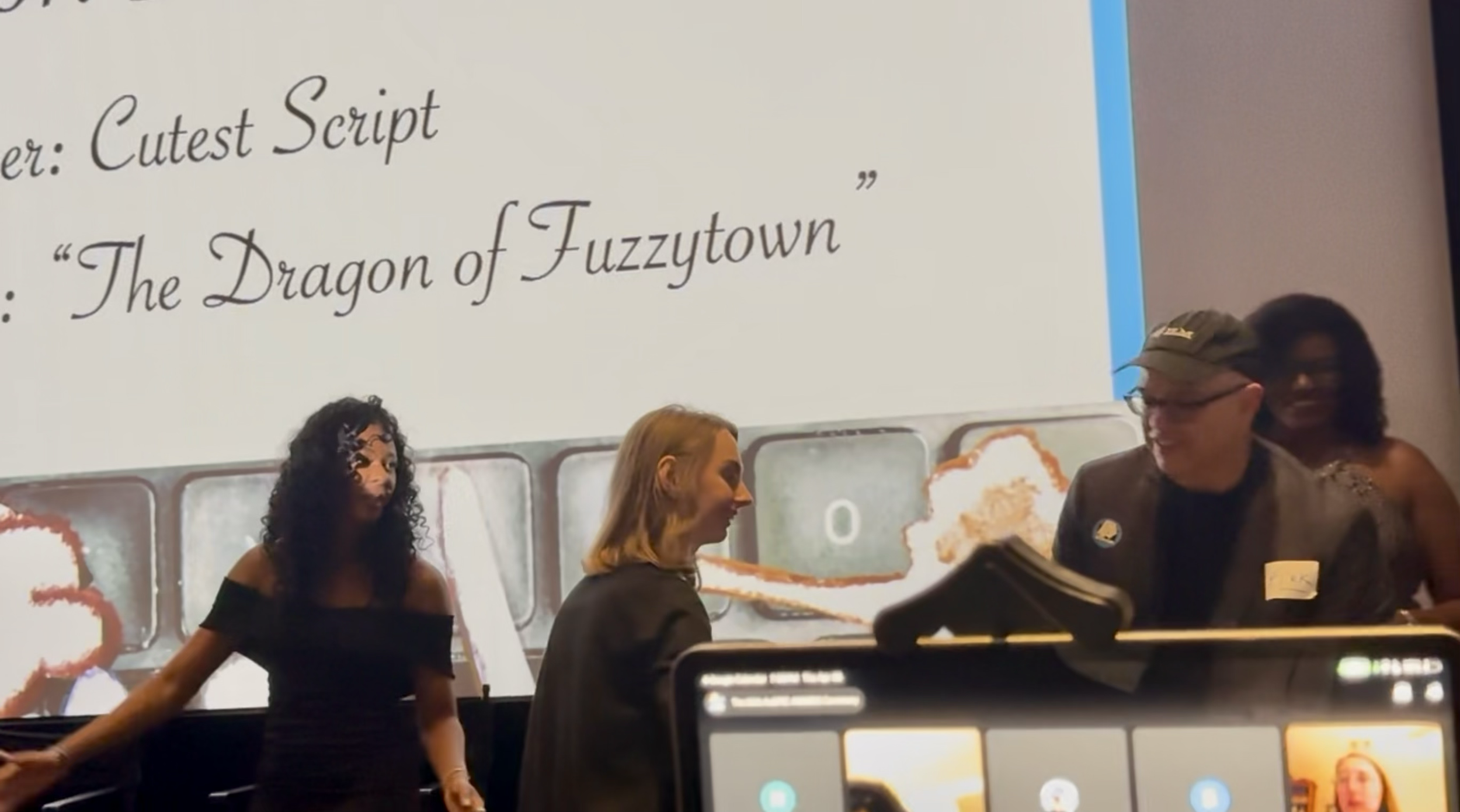
Kirk Kushin presenting Cutest Script to Madison Trembley
Another AuSPEC judge, an autistic animation writer and registered social worker Daniel Share-Strom, appeared by video to offer thoughts authentically creating autistic characters. His number one rule? Work with autistic people. Share-Strom should know – he created the autistic train car Bruno the Brake Car for the Thomas and Friends franchise.
The most unusual award of the evening was Best Card Battle Script, presented by the animation writer and executive Nicole Dubuc. “We were initially surprised how many entries used card battle games as a plot device,” said Dubuc, “but it makes sense. Card battle games often have deep lore, beautiful artwork, predictable structures, and creative strategies; all things that align with strengths often seen in autism.”
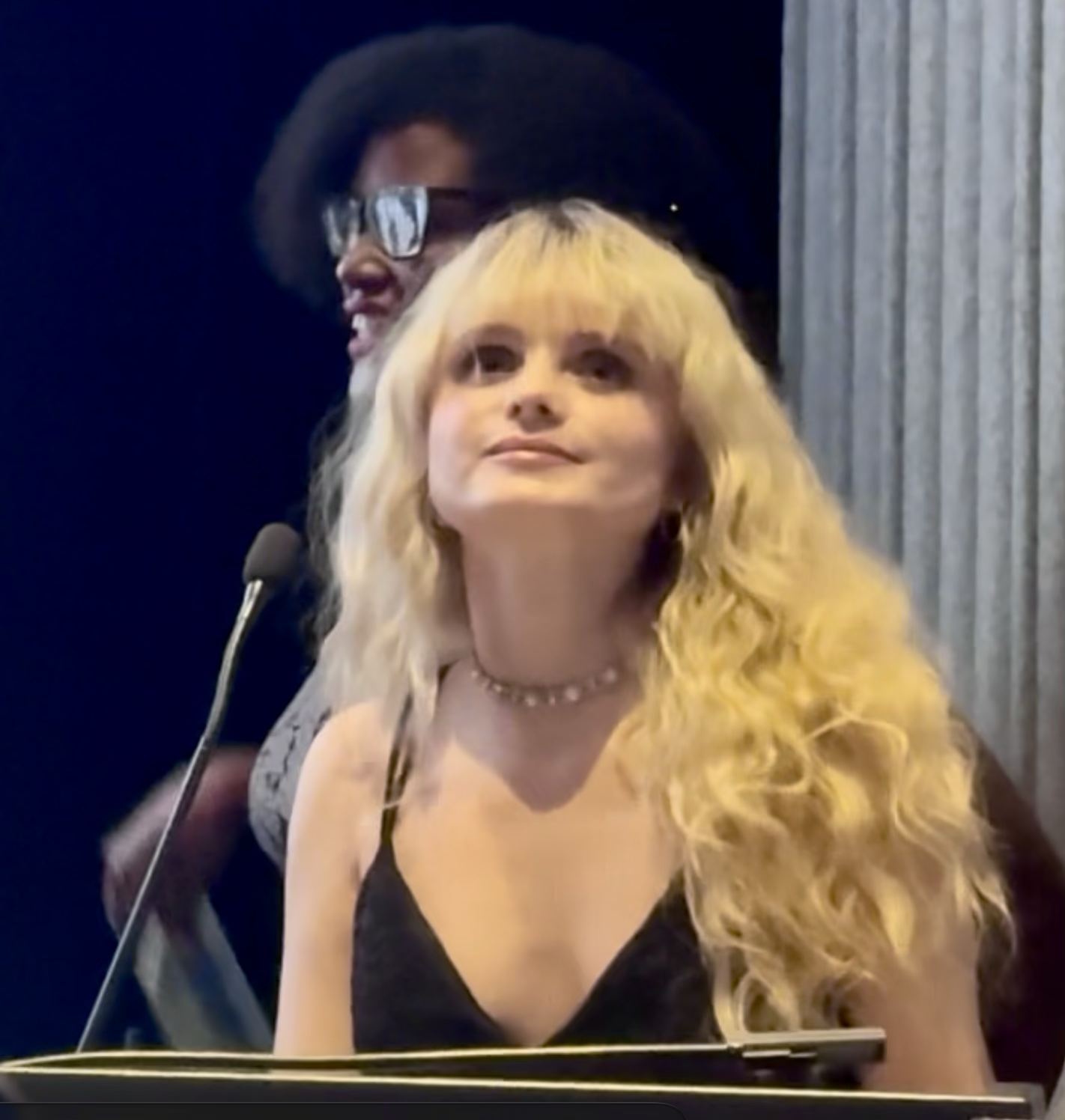
Kayla Cromer presenting Best Scary Script
Kayla Cromer is an autistic performer best known for her work as Charlie on ABC’s The Good Doctor and the comedy series Everything’s Gonna Be Okay. The kids in the audience were audibly impressed by her recreation of the voice of Twyla Boogeyman, an autistic character Cromer voiced on Nickelodeon’s animated hit Monster High. Cromer presented the 2026 AuSPEC AWARD for Best Scary Script. In presenting to the winner Austin Oguri for his Chibiverse episode, Cromer noted, “Some things that seem scary at first might not be that scary after all. Like explicitly autistic characters.”
Animation executive and creative producer Eric Coleman presented the award for Best Script by an Unsolicited Writer to Maggie Scudder, honored for her Phineas and Ferb episode. “The energy and the spirit and the talent and the love and the support and the good vibes in this room. It's fantastic.”
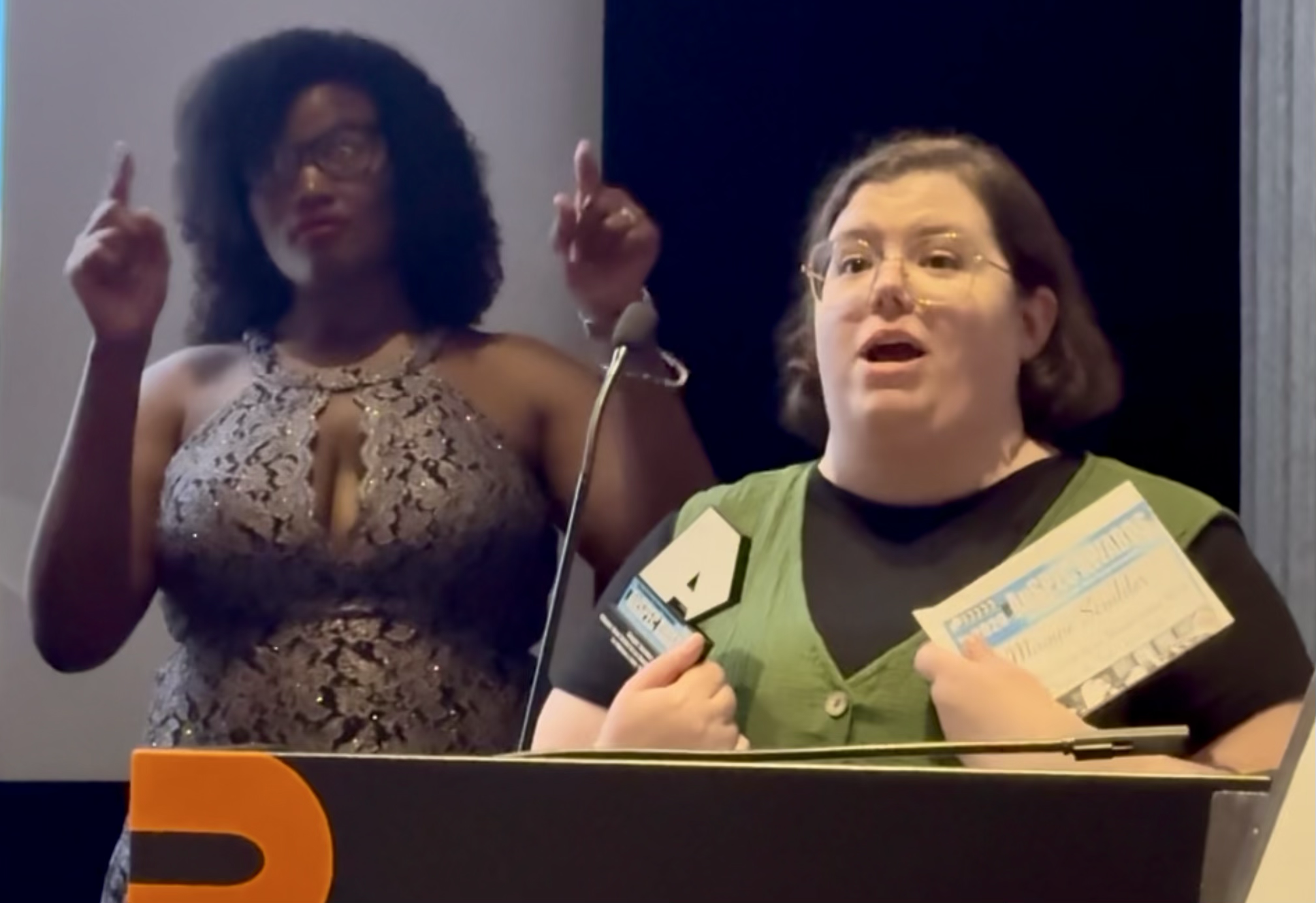
Maggie Scudder receiving Best Script by an Unrepresented Writer
Animation and comic book writer Jeremy Adams presented the Best Sci-Fi Script award to Michael Flood for his Star Wars: Young Jedi Adventures script. Then Adams was surprised with an award of his own. The Autism Scene Executive Director Britton Payne presented Adams its AuSPIRE AWARD for creating the character Jeffrey “PJ” Holt, aka Fairplay, DC Comics’ first explicitly autistic superhero. “Jeremy Adams told a rollicking story in DCKO: The Kids are All Fight Special,” Payne explained, “included an autistic character, and made his autism explicit, enabling young readers to translate their heroes’ behavior with Fairplay to the autistic peers in their own lives. He included instances of friendship, reliance, empathy, decisive action and appreciation for Fairplay’s thoughtful and important contributions to the team. The story acknowledges FairPlay’s difficulties as well as his exceptionalism, and The Autism Scene is thrilled with Jeremy Adams’ addition to the superheroic canon at DC Comics, as well as to the growing family of explicitly autistic characters in kids pop culture.”
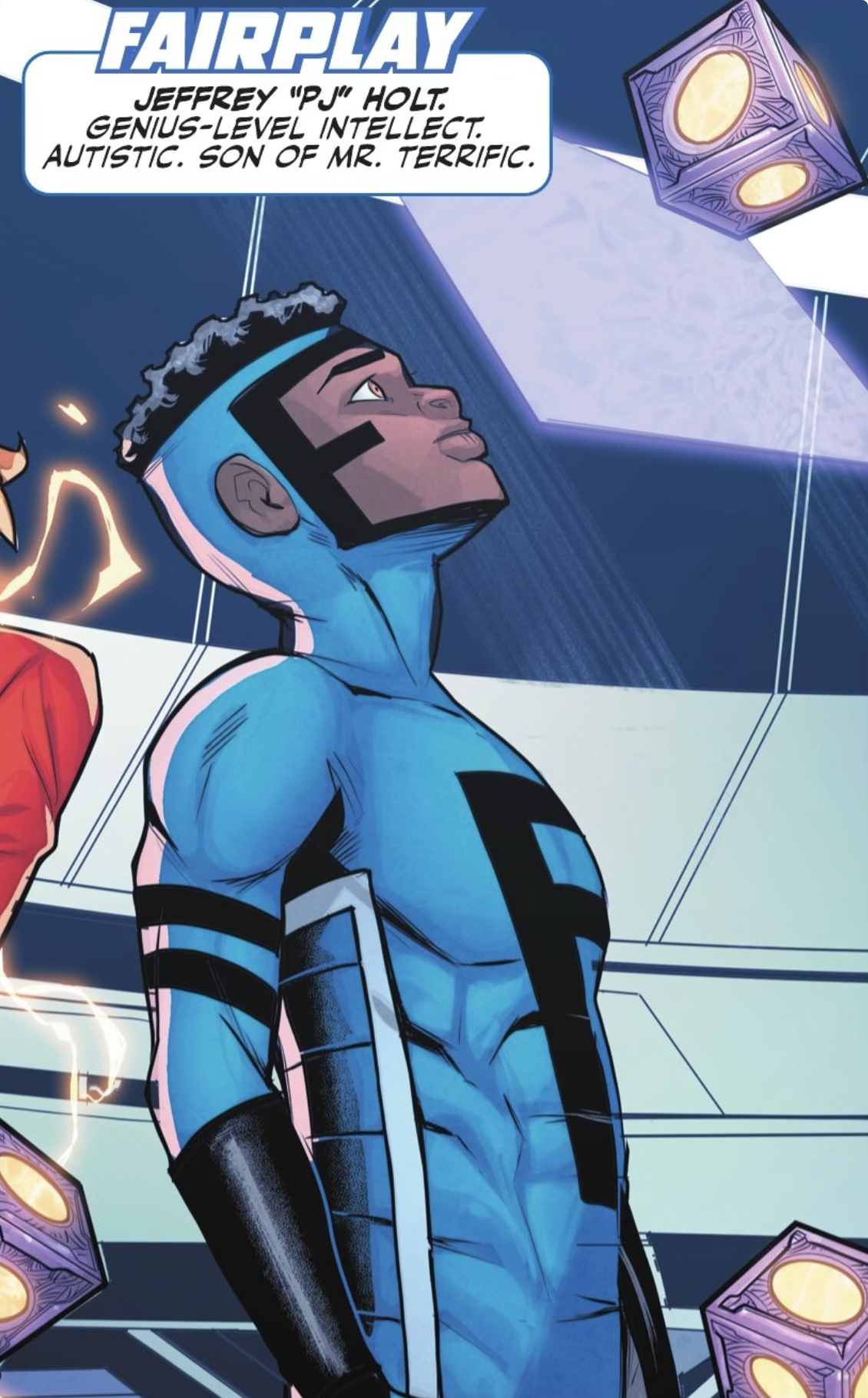
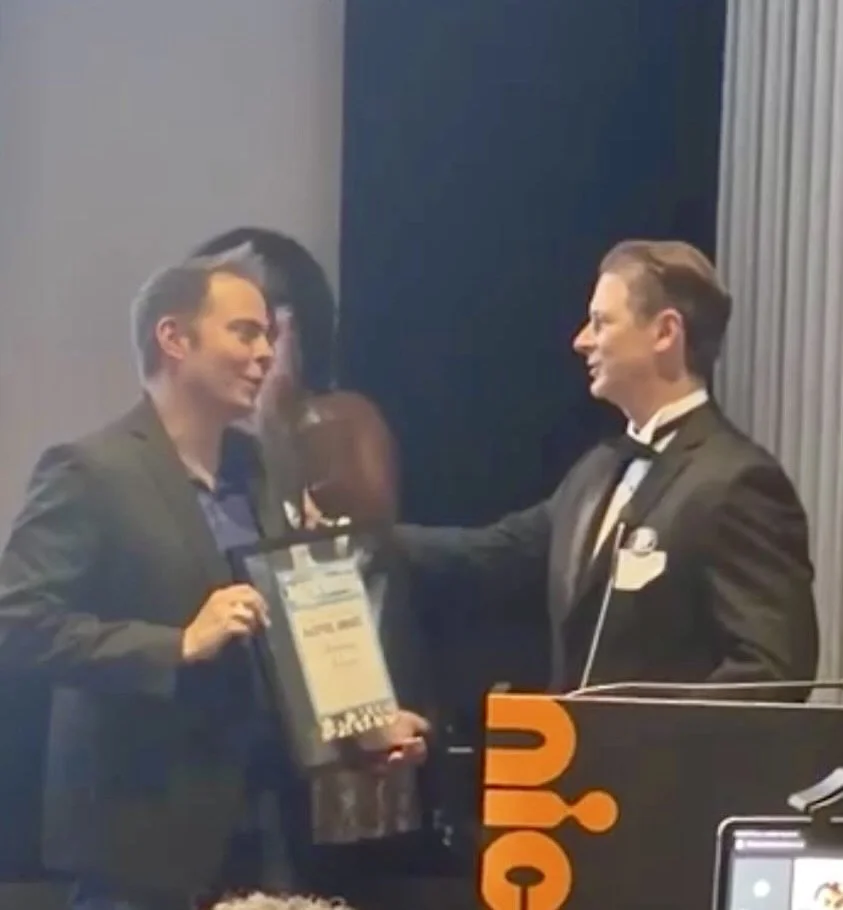
FairPlay, DC Comics’ first explicitly autistic superhero; Jeremy Adams receiving the AuSPIRE AWARD from Britton Payne
Payne then presented the grand prize to Layden and Page, the final award of the evening. “It was a really wonderful experience,” said Page. Layden was particularly motivated to enter the AuSPEC AWARDS competition. “My dad is autistic,” said Layden. “I have a master's in education that I got primarily working with neurodivergent at-risk kids. It is at the heart and the center of why I write and why I do the things I do. I want the things that I create to be the kind of thing that I wish I had in when I had my classroom.” Payne congratulated all the winners, and encouraged even more to write a script for the 2027 AuSPEC AWARDS.
Tom Kenny summed it all up, offering gratitude for “everybody who entered, you know, not necessarily won, but entered, and is putting creativity and positivity and jokes and music and adventure, and all that good stuff out into a world that really needs it.”
You can see more details, photos and videos at TheAutismScene.org. The full contest results are below.
1. Riley Roper
Winner: Funniest Script
for We Baby Bears: “Bears in Bull Ridge”
The baby bears are taken to the Western town of Bull Ridge, where they meet the aspiring hero, Clifton Calf, who happens to be on the autistic spectrum, and they help him save the town.
2. Josh Brown
Winner: Best Preschool Script
for Bluey: “The Ice Maker”
An autistic friend comes over to watch the footy game with Bandit. The girls play a dancing game and learn about the alternative communication style Bandit's friend uses.
3. Lio Guevara
Winner: Best Adventure Script
for Avatar the Last Airbender: “Keeping Cool”
While attempting to make their way through the Fire Kingdom undetected, Team Avatar’s true identities are discovered by a powerful fire bender who is on the autism spectrum, and they subvert the team’s expectations by showing them how to keep their cool when things get overwhelming.
4. Adrian Golden
Winner: Best Educational Script
for Rosie’s Rules: “Rosie’s New Neighbor”
Rosie Fuentes has a new neighbor, Noah Everett, and wants to be friends. She tries many attempts to introduce herself, but with little success, as she is overly excited. With help from Noah's mother, Rosie learns about Noah's autism and tries to take a more calm and sensitive approach.
5. D.G. Thompson
Winner: Best Superhero Script
for My Adventures With Superman: “A (Neuro)Divergent Path”
An autistic engineer tries to warn Superman about a sinister plot against him and gets swept up into the escalating conflict in a world that makes them both feel unwelcome.
6. Austin Oguri
Winner: Best Scary Script
for Chibiverse: “A Case of the Butterflies”
When Star Butterfly gets trapped in a mysterious place, she meets a new autistic friend whose unique talents may help the two figure out what’s really going on.
7. Mya Stark
Winner: Best Nonspeaking Character
for Frog and Toad: “Whippoorwill”
Toad babysits Robin's autistic cousin Whippoorwill and tries every trick to entertain her—until Frog shows him how to follow her quiet way of exploring the world.
8. Madeline Diemer
Winner: Best Use of an AAC Device
for Bluey: “Devices”
Bingo learns a new form of communication often associated with people on the autistic spectrum to make a friend.
9. Samantha Spiegel
Winner: Kindest Script
for Big City Greens: “The Chameleon”
When Cricket and Tilly Green meet June, a new girl who carefully masks her autism to fit in, a chaotic trip to the farmers market pushes June into sensory overload, teaching them that real friendship doesn’t require blending in.
10. Chloe Sarosdy
Winner: Best Musical Script
for Phineas and Ferb: “Heard of the Cards”
After a new autistic friend introduces them to the trading card game Battle Cards, Phineas and Ferb use nanotech to bring the cards to life!
11. Madison Trembley
Winner: Cutest Script
for Carl the Collector: “The Dragon of Fuzzytown”
Nico and Forrest must take pictures of trees for Carl's Fuzzytown Tree Picture collection, but Luna, their new autistic friend, needs their help, too.
12. Jeremy Fuscaldo
Winner: Best New Character
for My Adventures with Superman: “Up Up and Away”
New to Metropolis, a young boy on the autistic spectrum must face the trauma weighing on him before he can learn to fly like Superman. Just as life bogs down, his favorite hero swoops in to offer a much needed boost.
13. Kade Allen
Winner: Best Explanation of Autism
for Bluey: “Sharks N' Minnows”
Bluey and her classmates prepare for a field trip to the aquarium, while a new student on the autistic spectrum teaches them all how to play in new ways.
14. Corvin Kevlihan
Winner: Best Card Battle Script
for The Wonderfully Weird World of Gumball: “The Challenge”
When a new kid on the autistic spectrum easily defeats Gumball in a game of Little Pet Fight Club, Gumball vows to beat the kid in their next game, no matter what it takes.
15. Ari Donnelly
Winner: Best Friendship Script
for Kiff: “Pros at Cons”
Kiff and Barry are hyped to attend Table Town Comic Con, only to discover the greatest foe their boredom has ever faced: a super long line. Their day is saved by a new autistic friend they meet during their infinite wait.
16. Michael Flood
Winner: Best Sci-Fi Script
for Star Wars: Young Jedi Adventures: “Jedi Jitters”
A self-doubting Youngling who struggles in Jedi training, because of his autism, must rely on his unique way of processing the Force--and the support of his friends--when a droid-building phenom threatens the Jedi Archives.
17. Maggie Scudder
Best Script by an Unrepresented Writer
for Phineas & Ferb: “Cat Fight”
Phineas and Ferb build a life-size card-battle arena for Isabella’s visiting autistic cousin Maya, but when Doofenshmirtz unleashes a pet-adoption ray at the town’s pet fair, one humble card, “Just A Cat,” helps Maya become the unlikely hero.
18. Melinda Layden & Chris Page
Winner: Grand Prize
for Big City Greens: “Herding Cats”
When a cat-napper steals the neighbor's cat, Tilly and Cricket help a new, resourceful, autistic friend track him down.
The Autism Scene is a nonprofit group that advocates publicly and privately for the inclusion of more explicitly autistic characters in kids pop culture.
Contact: Britton Payne, Brit@TheAutismScene.org, (917) 561-3496